
CORPORATE CHRIST
The History of Magical Symbols and Their Origins
As Above So Below
The History of Magical Symbols and Their Origins
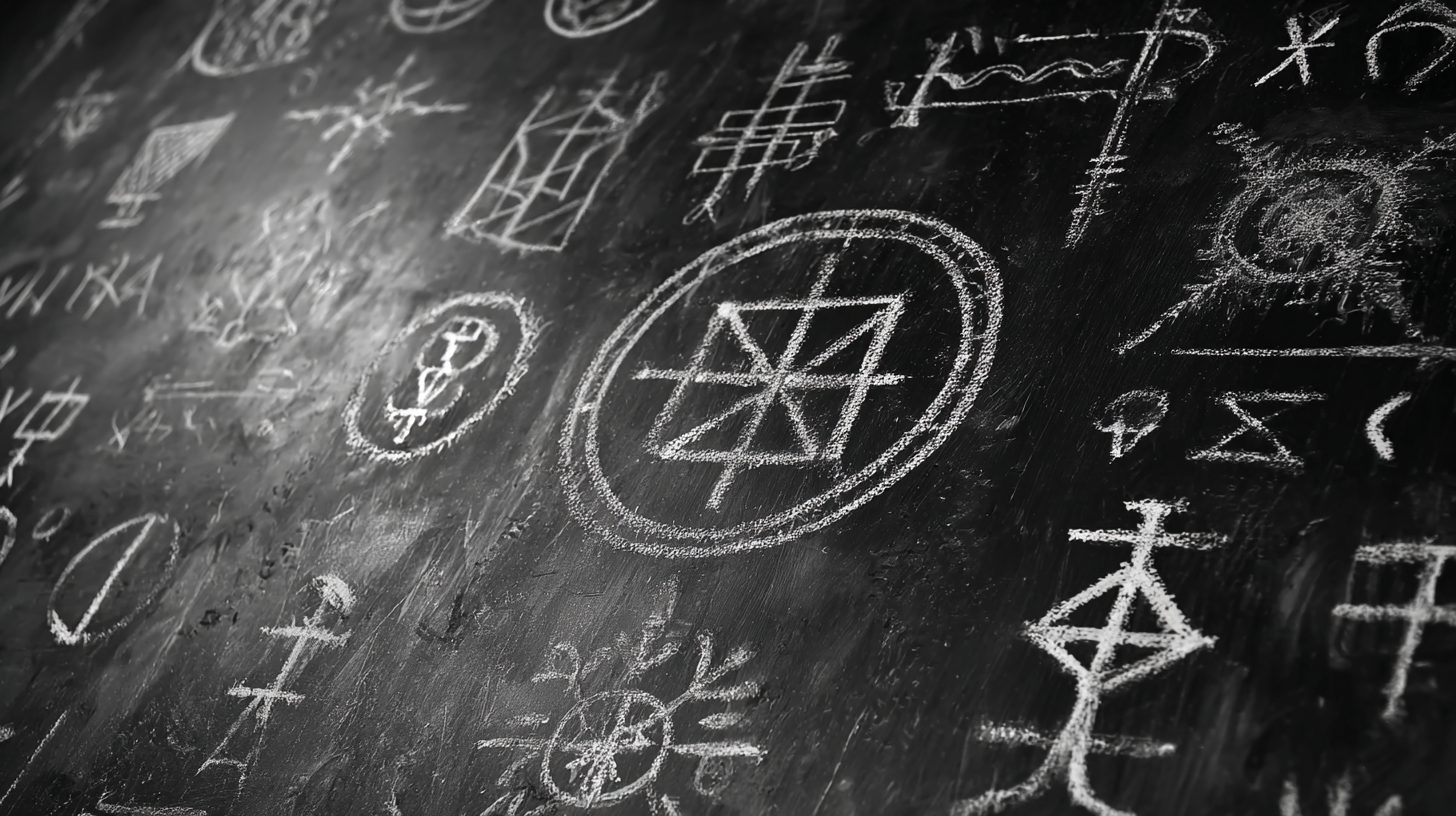
Magical symbols have been part of human culture for as long as people have attempted to understand, influence, and communicate with the unseen forces shaping their lives.
Long before written language became standardized, symbols acted as a visual shorthand for ideas that were complex, abstract, or sacred.
In many cultures, these images were not regarded as decoration but as tools, capable of focusing intention, preserving knowledge, and mediating between the human and the cosmic.
The historical study of these symbols offers a factual lens through which to understand how Magick developed alongside religion, philosophy, and early science.
At their core, magical symbols emerged from humanity’s need to impose order on an unpredictable world.
They condensed myths, natural observations, and spiritual beliefs into recognisable forms.
Whether carved into stone, drawn on papyrus, or traced in sand, symbols made invisible concepts visible and repeatable.
Over time, these forms became embedded in ritual systems, evolving as cultures interacted, traded, and conquered one another. The result is a shared symbolic vocabulary that appears across continents and millennia, often carrying remarkably similar meanings.
Prehistoric Roots and Symbolic Thought
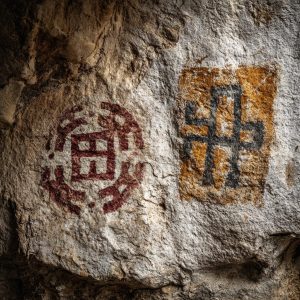
The earliest known symbols associated with ritual and belief appear in prehistoric cave art and carved objects dating back tens of thousands of years.
Spirals, handprints, zigzags, and animal figures found in sites such as Lascaux and Chauvet suggest symbolic thinking well beyond simple representation.
Anthropologists generally agree that these images were not purely aesthetic. Instead, they likely functioned as early attempts to influence hunting success, fertility, or protection, laying the conceptual groundwork for later systems of Magick.
These early symbols were deeply tied to survival.
Animals were not merely food sources but spiritual counterparts.
Depicting them was believed to establish a connection, perhaps even control. This idea, that representation equals participation, becomes a recurring theme throughout the history of symbolic practice. Even at this stage, symbols acted as bridges between thought and action, belief and outcome.
Ancient Egypt: Symbols as Cosmic Technology
Ancient Egypt represents one of the most systematic early uses of magical symbolism. Egyptian hieroglyphs functioned simultaneously as language, sacred imagery, and metaphysical technology.
Symbols such as the ankh, the djed pillar, and the Eye of Horus encoded concepts of life, stability, and divine protection.
These images were believed to operate actively within rituals, funerary practices, and temple ceremonies. In this context, Magick was inseparable from religion and governance.
Egyptian texts such as the Book of the Dead used symbolic language to guide the deceased through the afterlife. Amulets inscribed with specific forms were placed on bodies to ensure safe passage and rebirth.
Importantly, these symbols were not metaphorical; they were functional.
Their power was thought to arise from correct form, correct placement, and correct intention, an idea that would strongly influence later magical traditions.
Mesopotamia and the Power of Signs
In Mesopotamia, magical symbols were closely tied to astrology, divination, and written incantations.
Clay tablets from Sumerian, Akkadian, and Babylonian cultures reveal complex systems where symbols represented gods, planets, and natural forces.
Cuneiform signs were often inscribed on amulets and boundary stones to invoke protection or curse enemies.
Here, Magick was integrated into legal systems, medicine, and statecraft.
The Mesopotamian worldview assumed that the universe operated according to discernible patterns.
Symbols acted as keys to reading and influencing those patterns.
Planetary glyphs, in particular, formed an early link between celestial observation and symbolic abstraction. This laid the groundwork for later astrological symbolism in both the Islamic world and medieval Europe.
Greek Philosophy and Symbolic Abstraction
Ancient Greece introduced a philosophical shift in how symbols were understood.
While ritual practice continued, thinkers such as Pythagoras and Plato emphasized numbers and geometric forms as expressions of cosmic order.
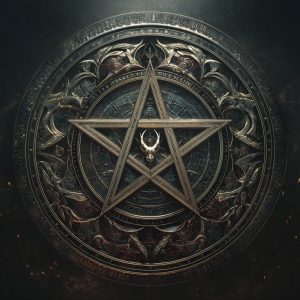
The pentagram, for example, symbolized harmony, proportion, and health. In Greek thought, Magick increasingly intersected with mathematics and metaphysics rather than purely devotional practice.
This abstraction had lasting consequences. Symbols became tools for contemplating universal truths rather than merely invoking divine intervention.
Geometry, in particular, gained a sacred dimension, suggesting that reality itself was structured according to intelligible, symbolic principles.
Jewish Mysticism and Kabbalistic Symbols
Within Jewish mystical traditions, especially Kabbalah, symbols took on highly structured and theoretical roles.
The Tree of Life diagram mapped the process by which divine energy was believed to manifest into the material world.
Each sephirah represented a distinct attribute, interconnected by paths that conveyed transformation and balance.
In this system, Magick was approached cautiously, often framed as spiritual refinement rather than practical manipulation.
Kabbalistic symbols influenced later Western esoteric traditions profoundly. Their emphasis on structure, hierarchy, and ethical responsibility introduced a moral dimension to symbolic practice.
Symbols were not neutral tools; they carried consequences for misuse or misunderstanding.
Medieval Europe and Christian Symbolism
During the medieval period, symbolic practices were reshaped under Christian theology. While overt magical practice was often condemned, symbols persisted within liturgy, architecture, and art.
The cross, the fish, and the lamb carried layered meanings related to salvation and divine authority.
At the same time, alchemical symbols flourished in more secretive circles.
Alchemy used symbolic language to describe both material transformation and spiritual purification, integrating Magick with early chemistry.
Manuscripts from this era reveal a rich symbolic vocabulary designed to conceal knowledge from the uninitiated.
Symbols served as protective encoding, ensuring that only those properly trained could interpret their meaning.
Islamic Scholarship and Symbolic Science
The Islamic Golden Age preserved and expanded symbolic systems inherited from Greek, Persian, and Indian sources. Scholars explored astrology, alchemy, and talismanic science with rigorous intellectual frameworks.
Geometric patterns in Islamic art reflect a symbolic emphasis on infinity, unity, and divine order.
In this context, Magick was often framed as a science of correspondences rather than superstition.
Arabic grimoires and talismanic diagrams later entered Europe through translation movements, deeply influencing Renaissance esotericism.
These works emphasized precision, calculation, and ethical restraint.
The Renaissance and Hermetic Revival
The Renaissance marked a renewed interest in ancient symbolic systems, particularly those attributed to Hermetic philosophy.
Texts such as the Emerald Tablet popularized the idea that symbolic knowledge could unite heaven and earth.
Symbols became central to ceremonial practice, alchemy, and early scientific inquiry. During this period, Magick was increasingly associated with human potential and intellectual mastery.
Artists, scholars, and practitioners believed that understanding symbols granted access to universal laws.
This belief contributed to the gradual separation of science from theology, even as both shared symbolic roots.
Enlightenment Skepticism and Symbolic Survival
The Enlightenment brought skepticism toward symbolic and magical worldviews.
Rationalism challenged the idea that symbols possessed inherent power. However, symbols did not disappear; they migrated into psychology, art, and literature. Secret societies preserved symbolic traditions, reframing Magick as moral allegory or personal development.
This period demonstrated the adaptability of symbols. Stripped of overt supernatural claims, they remained potent tools for meaning-making and identity formation.
Modern Psychology and Symbol Interpretation
In the modern era, thinkers such as
Carl Jung reinterpreted magical symbols as expressions of the collective unconscious. Symbols were seen as archetypes rather than literal forces. Under this framework, Magick became a
language of the psyche, valuable for insight and transformation rather than external manipulation.
This psychological interpretation allowed ancient symbols to regain legitimacy in academic and therapeutic contexts. Their persistence suggested that symbolic thinking is a fundamental human trait rather than a historical curiosity.
Contemporary Practice and Cultural Continuity
Today, magical symbols appear across popular culture, spirituality, and art.
From tattoos to digital sigils, symbols continue to serve as tools for intention-setting and identity expression.
Modern practitioners often approach Magick pragmatically, combining historical knowledge with personal meaning.
Importantly, contemporary use reflects historical continuity rather than invention. Symbols evolve, but their core function remains consistent: to condense complex ideas into accessible forms.
Symbols as Historical Evidence
From an academic perspective, magical symbols function as historical documents. They reveal how societies understood causality, power, and the relationship between humanity and the cosmos. Studying them factually dispels myths while preserving their cultural significance. In this sense, Magick is best understood not as fantasy but as a historical framework for engaging with uncertainty.
Symbols record humanity’s intellectual development, bridging myth, science, and philosophy.
Cross-Cultural Parallels
One of the most striking aspects of magical symbolism is the recurrence of similar forms across cultures. Spirals, circles, and crosses appear globally, often carrying analogous meanings. This suggests shared cognitive patterns rather than direct transmission.
Through this lens, Magick becomes evidence of universal symbolic instincts embedded in human consciousness.
These parallels reinforce the importance of symbols as tools for understanding both cultural diversity and commonality.
Conclusion: A Living Symbolic Language
The history of magical symbols is not a closed chapter but an ongoing narrative. Symbols endure because they adapt, absorbing new meanings while retaining ancient roots. Studied factually, they offer insight into how humans have consistently sought to engage with forces beyond immediate perception.
Even today, Magick remains a useful term for describing this enduring relationship between symbol, intention, and meaning, grounded not in fantasy but in the documented evolution of human thought.