
CORPORATE CHRIST
Using Tarot Cards as a Meditation Aid
As Above So Below

Using Tarot Cards as a Meditation Aid
Tarot is often framed through the language of prediction, fate, and supernatural belief. For many people, that framing creates unnecessary resistance. It suggests that Tarot demands belief in forces outside oneself, or adherence to a symbolic system that must be taken literally to be effective.
In practice, none of this is required. Tarot can be approached in a far more grounded, psychological, and reflective way. When used as a meditation aid, Tarot becomes a sophisticated visual language for exploring the subconscious mind.
This article deliberately steps away from superstition and fortune-telling. Instead, it treats Tarot as a structured set of archetypal images that can stimulate introspection, emotional insight, and creative thought.
Much like dream analysis, free association, or guided imagery, meditating with Tarot cards offers a way to bypass habitual thinking and access deeper layers of awareness. The cards do not “tell” you anything; they invite you to notice what arises within you.
Tarot as a Visual Language of the Mind
At its core, Tarot is a collection of images arranged into a coherent symbolic system. The human brain responds strongly to imagery, metaphor, and narrative. Long before abstract reasoning evolved, meaning was conveyed through pictures, stories, and symbols. Tarot works precisely because it speaks this older psychological language.
Each Tarot card presents a scene rather than a definition. A figure stands at the edge of a cliff, a tower collapses under lightning, a person balances two coins in motion. These images do not dictate interpretation. Instead, they provoke association. The mind begins to fill in context, emotion, memory, and personal relevance. This is where Tarot becomes useful as a meditation tool.
When you meditate on a Tarot image, you are not trying to decode a hidden message. You are allowing the subconscious to project meaning onto a neutral stimulus. This is similar to how inkblot tests function, or how dreams use symbolic imagery rather than literal explanation. Tarot simply provides a consistent and richly layered visual vocabulary to work with.
Why Tarot Works Well for Meditation
Meditation is often misunderstood as the absence of thought. In reality, many contemplative practices work with thought rather than against it. Visualization, mantra, and contemplative inquiry all use the mind as an instrument of awareness. Tarot fits naturally into this category.
Tarot offers three specific advantages as a meditation aid:
First, it provides focus. Many people struggle with meditation because the mind drifts aimlessly. A Tarot card gives the attention something concrete to rest on without becoming intellectually demanding.
Second, it encourages emotional honesty. Tarot imagery often evokes subtle emotional responses before conscious reasoning intervenes. This makes it easier to notice feelings that might otherwise remain unacknowledged.
Third, it introduces productive ambiguity. Unlike affirmations or scripted visualizations, Tarot does not tell you what to think. The open-ended nature of the images allows insight to emerge organically.
For these reasons, Tarot can be especially helpful for people who find silent mindfulness challenging or who benefit from structured introspection.
Moving Beyond Literal Meanings
Most Tarot decks come with guidebooks listing keywords and traditional interpretations. While these can be useful as a starting point, they should not dominate a meditative practice. When Tarot is used for meditation, literal meanings are secondary to personal resonance.
A card traditionally associated with loss may, in meditation, evoke relief, closure, or even liberation. Another card commonly framed as positive may bring discomfort or resistance. These responses are not mistakes. They are precisely the point.
Meditating with Tarot involves allowing your own associations to take precedence over inherited symbolism. The traditional meanings exist to anchor the system, but your lived experience gives the cards their relevance. Over time, each Tarot card becomes a mirror reflecting different aspects of your internal landscape.
This approach aligns closely with modern psychological understandings of symbolism. Meaning is not fixed; it is relational. Tarot becomes meaningful because of how it interacts with your current state of mind.
Preparing for Tarot Meditation
Before beginning a Tarot meditation practice, it is helpful to establish a simple and consistent ritual. This does not need to be elaborate or mystical. The purpose is to signal to the mind that you are entering a reflective space.
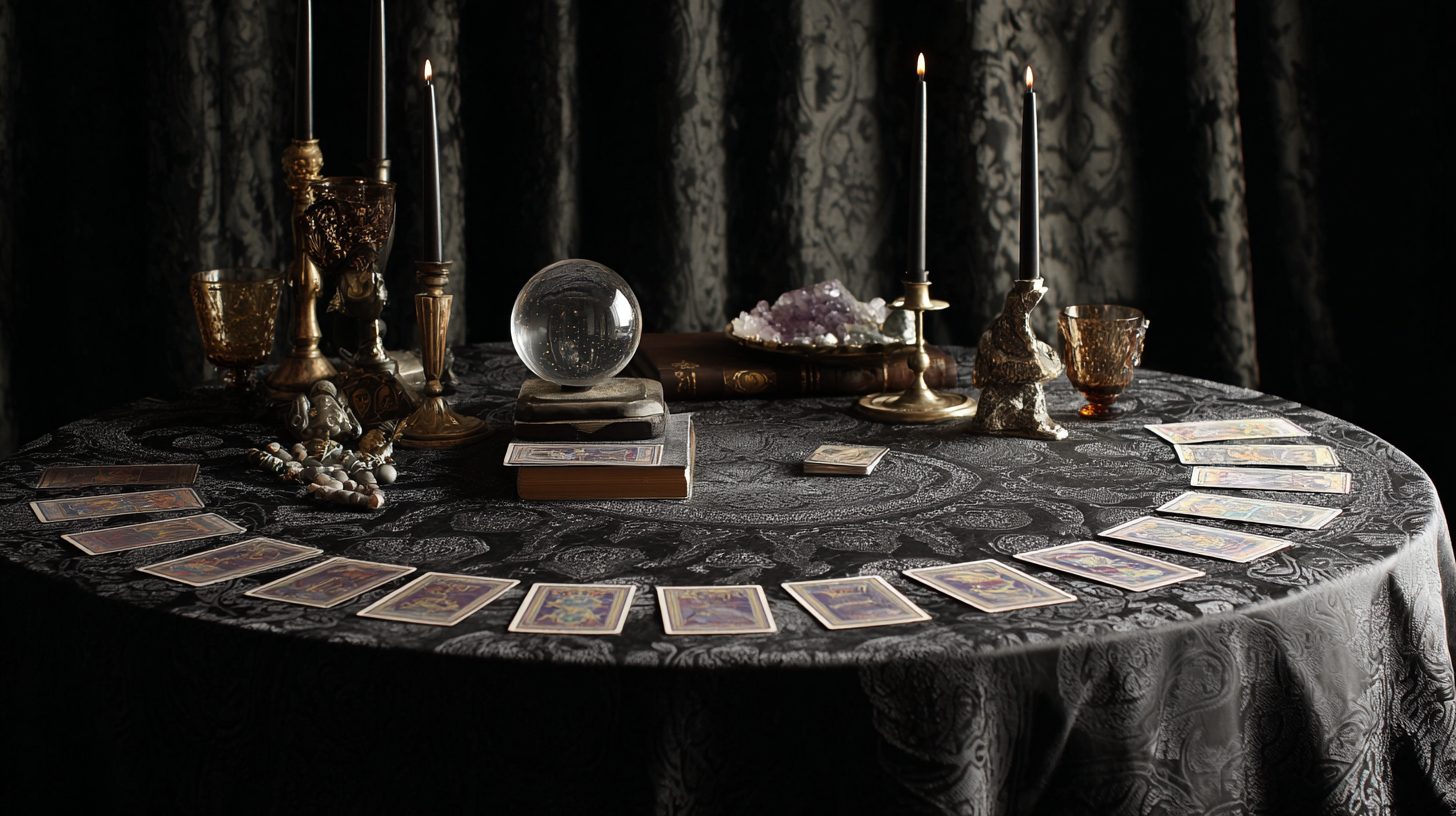
Choose a quiet environment where you are unlikely to be interrupted. Sit comfortably, either at a table or on the floor. Have your Tarot deck nearby, ideally one whose imagery you find aesthetically engaging. Visual appeal matters more here than tradition or pedigree.
Begin with a few minutes of calm breathing. This helps settle surface-level mental noise. You are not trying to empty the mind completely; you are simply creating enough stillness to notice what emerges once the image is introduced.
At this point, draw a single Tarot card. One card is sufficient for most meditation sessions. The goal is depth, not quantity.
The Basic Tarot Meditation Technique
Place the Tarot card in front of you at eye level. Look at it without analysing. Notice colours, shapes, figures, and spatial relationships. Allow your gaze to move naturally across the image.
After a minute or two, gently close your eyes and hold the image in your mind. You are not trying to memorise details perfectly. Let the card become slightly impressionistic, like a remembered dream.
Now begin to observe what arises. Thoughts may appear as words, images, memories, or bodily sensations. Do not force interpretation. Simply note what comes up and allow it to unfold.
If the mind wanders, return your attention to the Tarot image. You may open your eyes periodically to reconnect with the card. After ten to fifteen minutes, gently conclude the meditation and, if helpful, write down any observations.
This practice is deceptively simple. Its effectiveness lies in repetition and patience.
Working With Archetypes and Inner Narratives
One of the most powerful aspects of Tarot meditation is its relationship to archetypes. Archetypes are recurring patterns of experience that appear across cultures and individual lives. They are not characters in a literal sense, but modes of being and responding.
Tarot is structured almost entirely around archetypal themes. Authority, change, conflict, choice, loss, integration, renewal. When you meditate on a Tarot card, you are engaging with one of these patterns directly.
Over time, you may notice that certain Tarot cards evoke recurring themes in your life. One card may consistently bring up issues around boundaries. Another may highlight avoidance or ambition. These patterns are not imposed by the cards; they are revealed through your responses to them.
This makes Tarot an effective tool for self-inquiry. It externalises internal dynamics, allowing you to observe them with greater clarity and less defensiveness.
Using Tarot for Emotional Processing
Tarot meditation can be particularly useful during periods of emotional complexity. When feelings are difficult to articulate, images can provide an indirect route to understanding.
If you are experiencing a vague sense of unease, drawing a Tarot card and meditating on it can help crystallize what is happening beneath the surface. The image may resonate with a specific memory, relationship dynamic, or unmet need.
Importantly, this process does not require you to believe that Tarot is diagnosing you or offering guidance from an external source. The card is simply acting as a catalyst for introspection. The insight comes from you.
This approach can complement journaling, therapy, or other reflective practices. Tarot becomes a conversation partner rather than an authority.
Tarot and the Subconscious Mind
From a psychological perspective, Tarot meditation functions as a form of active imagination. It provides structured stimuli that engage the subconscious without overwhelming it.
The subconscious communicates primarily through symbols, emotions, and associations rather than linear logic. Tarot speaks this language fluently. By meditating on Tarot images, you create a bridge between conscious awareness and subconscious material.
This can lead to moments of sudden clarity, emotional release, or creative inspiration. It can also surface discomfort. Both outcomes are valuable. The goal is not comfort but awareness.
Regular Tarot meditation strengthens your ability to notice subtle mental and emotional cues. Over time, this sensitivity carries into everyday life, enhancing self-regulation and insight.
Integrating Tarot Meditation Into Daily Life
You do not need long sessions to benefit from Tarot meditation. Even five minutes can be effective if practiced consistently. Some people incorporate Tarot into a morning routine as a way to set an introspective tone for the day. Others use it in the evening to process experiences.
You might also work with a single Tarot card over several days, returning to it repeatedly and observing how your responses change. This highlights the dynamic relationship between image and psyche. The card remains the same; you do not.
It can be useful to keep a dedicated notebook for Tarot reflections. Writing helps translate non-verbal insights into conscious understanding. Over time, patterns will emerge that deepen your relationship with the practice.
Avoiding Common Pitfalls
When using Tarot as a meditation aid, there are a few common traps to avoid.
The first is over-intellectualisation. While learning about Tarot symbolism can be enriching, excessive analysis can block intuitive response.
The second is emotional avoidance. Tarot meditation may surface uncomfortable material. Resist the temptation to immediately reframe or rationalise. Allow feelings to be present without judgment.
The third is externalisation of authority. Tarot does not replace decision-making or personal responsibility. It offers perspective, not instruction. Maintaining this distinction keeps the practice grounded and psychologically healthy.
Tarot as a Tool for Meaning-Making
Ultimately, Tarot meditation is about meaning rather than prediction. It helps you explore how you construct meaning from experience. By engaging with Tarot images, you become more aware of the narratives you carry and the assumptions that shape your perceptions.
This awareness creates choice. When unconscious patterns become conscious, they lose some of their power. Tarot does not solve problems for you, but it can illuminate how you are relating to them.
In this sense, Tarot functions less like an oracle and more like a reflective surface. It shows you your own mind at work.
Conclusion
Using Tarot cards as a meditation aid offers a practical, psychologically grounded way to engage with the subconscious. Stripped of superstition, Tarot reveals itself as a refined system of imagery designed to stimulate reflection, emotional awareness, and insight.
Through regular meditation with Tarot, you can cultivate a deeper relationship with your inner world. The cards do not speak; you do. Tarot simply gives the subconscious a language it recognises.
Approached in this way, Tarot becomes neither mystical nor trivial. It becomes a disciplined practice of attention, curiosity, and self-understanding.