
CORPORATE CHRIST
The Knights Templar:
Friday the 13th
As Above So Below
The Knights Templar: Friday the 13th
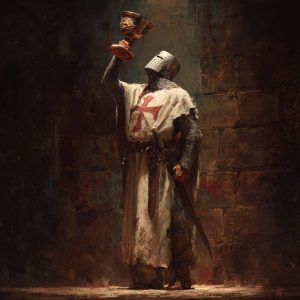
On Friday the 13th, October 13th, 1307, one of the most dramatic and consequential events in medieval European history unfolded.
At dawn, across the Kingdom of France, royal officers moved simultaneously to arrest members of the once-powerful military order known as the Knights Templar. The operation was swift, coordinated, and devastating.
It is from this moment, Friday the 13th, that an enduring cultural superstition was born. But beneath folklore and conspiracy lies a complex political drama involving monarchy, debt, religious authority, and the uneasy relationship between power and enlightenment.
This article explores what truly happened on Friday the 13th, why the Templars were targeted, and how later traditions—particularly within Freemasonry—reinterpreted the Templar legacy.
The Rise of the Templars
Founded around 1119 in the aftermath of the First Crusade, the Knights Templar were originally tasked with protecting Christian pilgrims traveling to Jerusalem. Their full name, the Poor Fellow-Soldiers of Christ and of the Temple of Solomon, reflected their dual identity: monks and warriors.
Over nearly two centuries, the order evolved into something unprecedented:
- A transnational military force
- A sophisticated financial institution
- A landholding power with estates across Europe
- A direct subject of the Papacy
The Templars pioneered early banking systems. They issued letters of credit, managed deposits, and transferred funds internationally.
Kings and nobles entrusted them with vast sums.
By the early 14th century, they were wealthy, autonomous, and deeply embedded in European geopolitics.
And that autonomy would become fatal.
The Political Trap
The central figure behind Friday the 13th was Philip IV of France, known as Philip the Fair. He was heavily indebted to the Templars.
His treasury had been strained by wars and administrative reforms. Eliminating his creditors offered both financial and political advantage.
Philip secretly coordinated with Pope Pope Clement V.
On Friday the 13th, sealed orders were opened simultaneously across France. Templars were arrested en masse and charged with:
- Heresy
- Idolatry
- Blasphemy
- Corruption
- Sodomy
The accusations were shocking.
Under torture, some members confessed to ritual denials of Christ and alleged secret rites involving mysterious idols. Whether these confessions were coerced fabrications or distorted initiatory practices remains debated.
But the machinery of accusation was effective.
And so, Friday the 13th entered history.
The Fall of Jacques de Molay
The last Grand Master of the order, Jacques de Molay, initially confessed under duress but later retracted.
After years of imprisonment and trials, he was burned at the stake in 1314 in Paris.
Legend claims that as flames consumed him, he summoned both Philip IV and Pope Clement V to divine judgment within a year. Both men indeed died shortly thereafter, fueling the mythic aura surrounding the order.
Though the arrests began on Friday the 13th, the psychological impact rippled for years. The Templars were officially dissolved in 1312, but the symbolism of Friday the 13th endured as a date of betrayal, suppression, and hidden knowledge.
Did the Templars Go Underground?
Historically, the dissolution scattered surviving members. Some joined other military orders, such as the Hospitallers. In certain regions, especially Portugal and Scotland, Templars appear to have been absorbed into successor institutions.
The popular narrative claims that after Friday the 13th, the Templars did not vanish but transformed.
According to later esoteric traditions, they preserved their teachings underground, eventually re-emerging within Freemasonry.
This claim is not supported by direct medieval documentation linking operational continuity.
However, symbolic and mythological connections became powerful in the 18th century when Masonic rites began incorporating Templar imagery.
The myth became part of Masonic identity.
Freemasonry and the Templar Legacy
Freemasonry emerged in its modern speculative form in the 17th and 18th centuries. It presented itself as a fraternity rooted in stonemason guilds, emphasizing moral development, symbolism, and enlightenment principles.
Within certain high-degree systems, especially the Scottish Rite, the Templar narrative is explicitly referenced.
The 33rd Degree, often associated with the phrase “The Royal Secret,” is interpreted by some as an acknowledgment of hidden continuity between medieval chivalric orders and modern initiatic traditions.
Historically, the 33rd Degree was formalized in 1801 in Charleston, South Carolina.
It functions as an honorary degree recognizing service and leadership.
The idea that “The Royal Secret” is the literal survival of the Templars is more allegorical than documented.
Yet the symbolism is deliberate.
The Templars represented disciplined faith. Freemasonry reframed that image into a system of moral and philosophical initiation. In that sense, the torch of illumination passed not through bloodlines but through myth and symbol.
And so, the trauma of Friday the 13th became reinterpreted as martyrdom for knowledge.
Opposition to the Catholic Church?
The historical Templars were loyal to the Church. They answered directly to the Pope. Their downfall came through political manipulation, not doctrinal rebellion.
However, in later Masonic mythology, the narrative shifted. The story of Friday the 13th became a parable about institutional corruption suppressing enlightenment.
The Church, in this framing, represented dogmatic authority; the Templars symbolized hidden wisdom.
This reinterpretation aligned with Enlightenment-era anti-clerical sentiment. By the 18th century, Freemasonry often attracted thinkers who championed reason, natural law, and liberty over ecclesiastical control.
Thus, Friday the 13th evolved from a medieval crackdown into a symbolic rupture between authority and illumination.
Why Friday the 13th Became Ominous
The superstition surrounding Friday the 13th blends several cultural threads:
- Friday as the day of Christ’s crucifixion
- The number 13 disrupting the “perfect” 12
- The coordinated arrests of the Templars
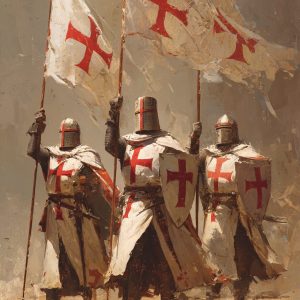
While the superstition likely predates the Templars in some form, their purge amplified the association. The image of noble knights seized at dawn on Friday the 13th etched itself into collective memory.
It became shorthand for sudden betrayal.
Separating History from Esotericism
From a historian’s perspective:
There is no direct archival evidence proving Freemasonry is a secret continuation of the Templars.
The 33rd Degree does not officially claim literal Templar descent.
The “Royal Secret” refers to philosophical teachings about unity and moral governance rather than a suppressed bloodline.
However, myth operates differently from archival history.
Myth encodes psychological truth.
The story of Friday the 13th speaks to the perennial tension between power and conscience, wealth and suspicion, independence and control. It reflects what happens when an organization grows too autonomous within a centralized political system.
The Psychological Archetype of Friday the 13th
On a symbolic level, Friday the 13th represents:
- The fall of institutions
- The suppression of perceived heresy
- The transformation of power into secrecy
- The rebirth of ideas in new forms
In that sense, whether or not Freemasonry directly descended from the Templars, the mythic inheritance is real. The Templar image became embedded in Western esoteric identity.
And so, Friday the 13th is less about superstition and more about transformation under pressure.
Legacy and Cultural Impact
Modern fascination with Friday the 13th extends into literature, film, and conspiracy theory. The idea of hidden orders, suppressed wisdom, and secret lineages captivates the imagination.
But the historical core remains stark: on Friday the 13th, political expediency overpowered religious idealism.
The Templars were undone not by demons or mystical secrets, but by debt, power, and fear.
Yet paradoxically, the attempt to destroy them amplified their legend. The more complete the purge on Friday the 13th, the more indestructible the myth became.
Final Reflections
The events of Friday the 13th in 1307 were real. The arrests were coordinated. The torture was brutal. The order was dismantled.
The Freemasonic narrative that positions itself as heir to the Templars is symbolic rather than demonstrably genealogical. The 33rd Degree’s “Royal Secret” operates within a philosophical framework, not a documented underground resistance.
But history often evolves through reinterpretation.
Friday the 13th began as a day of suppression. It became a symbol of betrayal. Later, it transformed into a metaphor for hidden continuity.
And perhaps that is the true legacy of Friday the 13th: ideas cannot be burned. Institutions can be dissolved. Leaders can be executed. But myths adapt.