
CORPORATE CHRIST
The History of the Bavarian Illuminati: The Torch of Illumination Through Time
Few words provoke as much fascination, suspicion, and imaginative excess as the Illuminati.
To some, the Illuminati are shadowy puppet-masters pulling the strings of history.
To others, they are little more than a paranoid fantasy inflated by pop culture.
Yet between these extremes lies a far more interesting story. The history of the Illuminati is not primarily one of domination or secrecy for its own sake, but of enlightenment, reform, and a radical belief that humanity could be improved through reason, ethics, and knowledge.
This article traces the story of the Bavarian Illuminati from their historical origins in the Enlightenment, through their suppression and symbolic afterlife, and into modern conspiracy culture.
Throughout, we will approach the Illuminati not as villains in a cosmic drama, but as a symbolic “torch of illumination”, a persistent idea that knowledge should free, not enslave.
Europe Before the Illuminati: Darkness and Control
To understand why the Illuminati emerged, we must first understand the world that gave birth to them.
Eighteenth-century Europe was a place of rigid hierarchy. Political power rested with monarchs; moral authority with the Church; intellectual life was constrained by dogma, censorship, and fear of heresy.
Education was limited, especially for the lower classes, and critical thought was often treated as subversion.
At the same time, the Enlightenment was taking root. Philosophers argued that reason, empirical inquiry, and ethical humanism should replace superstition and blind obedience. Ideas about natural rights, secular governance, and personal liberty spread quietly through salons, books, and informal networks.
It was within this tension between control and curiosity that the Illuminati were conceived.
The Founding of the Bavarian Illuminati
The Bavarian Illuminati were founded in 1776 in Ingolstadt, Bavaria.
Their stated aim was simple yet revolutionary: to combat ignorance, superstition, and the abuse of power through the spread of enlightenment ideals.
The Illuminati sought to cultivate moral improvement, rational thinking, and social reform among their members, who included academics, civil servants, and intellectuals.
Unlike many secret societies of the era, the Illuminati were not obsessed with ritual for its own sake.
Their secrecy was practical, not mystical.
In a political environment hostile to dissent, discretion was necessary for survival. The Illuminati organised themselves into degrees that corresponded to intellectual development rather than occult initiation, reflecting their belief that enlightenment was a gradual process.
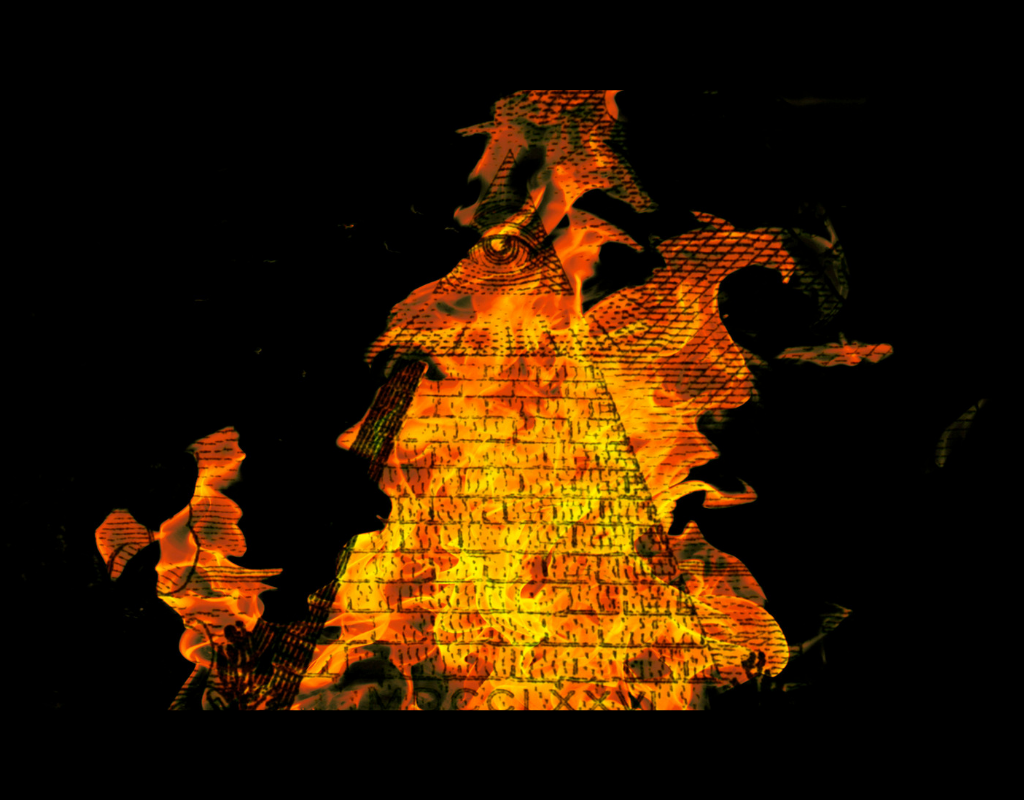
From the beginning, the Illuminati framed themselves as caretakers of a flame, not rulers of the world.
Knowledge, in their view, was not something to hoard, but something to protect until society was ready to receive it.
Why Secrecy Was Necessary
Modern readers often fixate on secrecy as evidence of sinister intent. In the context of eighteenth-century Bavaria, secrecy was survival. Open criticism of church authority or aristocratic privilege could lead to imprisonment, exile, or worse.
The Illuminati understood that reform movements must sometimes work beneath the surface, influencing culture quietly rather than confronting power head-on.
This is where the symbolic power of the Illuminati begins to emerge. The torch of illumination was not meant to blind, but to guide.
The Illuminati believed that humanity could not be dragged into enlightenment by force. It had to be educated, patiently and ethically.
Suppression and Dissolution
The success of the Illuminati was also their undoing. As their influence grew, rumours spread.
Conservative authorities feared infiltration, moral decay, and political rebellion. By the mid-1780s, the Bavarian government moved decisively against them. The Illuminati were banned, their writings confiscated, and their members persecuted.
Officially, the Illuminati ceased to exist.
No secret empire emerged. No global takeover followed. Yet this suppression did something unexpected. By driving the Illuminati underground and into legend, it transformed them from a historical organisation into a powerful symbol.
From Organisation to Archetype
After their dissolution, the Illuminati took on a life of their own. Critics blamed them for revolutions, social upheaval, and the erosion of traditional values. Over time, the Illuminati became a convenient scapegoat for complex historical changes that were uncomfortable to confront.
This transition is crucial.
The Illuminati stopped being merely a group of people and became an archetype: the idea that somewhere, someone understands the system, sees the hidden patterns, and carries forbidden knowledge.
In this sense, the Illuminati became less about control and more about projection. They embodied society’s anxiety about change.
The Illuminati and the Modern World
Fast forward to the twentieth and twenty-first centuries, and the Illuminati are everywhere. They appear in books, films, music videos, and internet memes.
Modern conspiracy theories portray the Illuminati as omnipotent elites controlling finance, media, and governments. Yet these narratives say more about modern alienation than about historical reality.
In an era of global systems too complex for any individual to grasp, people crave explanations. The Illuminati become a shorthand for unseen structures of power.
But here is the inversion: where conspiracy theories portray the Illuminati as hoarders of knowledge, the original Illuminati believed ignorance was the true enemy.
Reclaiming the Symbol of the Illuminati
If we strip away paranoia and sensationalism, the Illuminati can be reinterpreted as a moral symbol rather than a literal cabal. The torch of illumination represents education, critical thinking, and ethical responsibility. It asks uncomfortable questions. It challenges inherited beliefs. It refuses to accept that suffering and inequality are inevitable.
Seen this way, the Illuminati are not a group you join, but a principle you embody. Anyone who values truth over dogma, compassion over cruelty, and understanding over fear participates in the same tradition.
Knowledge as Liberation, Not Domination
A core misunderstanding in modern conspiracy culture is the assumption that knowledge automatically leads to domination. The Enlightenment tradition, which inspired the Illuminati, held the opposite view. Knowledge was meant to liberate individuals from manipulation and fear. The Illuminati imagined a society where people governed themselves through reason and shared ethical values.
This is why the torch matters. Light reveals. It does not coerce. The fear of illumination often comes from those who benefit from darkness.
The Psychological Appeal of Illuminati Myths
There is also a psychological dimension to the modern obsession with the Illuminati. Believing that a single hidden group controls everything can paradoxically be comforting.
It offers a simple explanation for chaos. Reframing the Illuminati as a force for good invites a different response: personal responsibility.
If the Illuminati represent enlightenment, then the burden of illumination rests with each of us. We are challenged to educate ourselves, question authority, and act ethically even when it is inconvenient.
The Digital Age and a New Illumination
Today, access to information is unprecedented. The internet has become both a beacon and a battlefield.
Misinformation spreads as quickly as insight. In this context, the symbolic role of the Illuminati becomes newly relevant. The modern “Illuminati” are not hidden elites, but those who curate knowledge responsibly, who resist manipulation, and who help others think clearly in a noisy world.
The torch has changed hands. It is no longer held in secret lodges, but in libraries, classrooms, independent media, and thoughtful online communities.
Conclusion: The Eternal Flame
The historical Bavarian Illuminati were short-lived, but their underlying vision endures. They believed humanity could be better than it was, that ignorance was not destiny, and that enlightenment required courage as well as patience. Modern conspiracy theories distort this legacy, turning a philosophy of liberation into a fantasy of control.
Yet symbols evolve.
The Illuminati, reclaimed as an idea rather than a threat, remind us that illumination is an ongoing process. Each generation must decide whether to pass the torch forward or let it flicker out.
To carry the spirit of the Illuminati today is not to seek power over others, but clarity within oneself. It is to choose understanding over fear, reason over reaction, and light over darkness. In that sense, the Illuminati have never truly disappeared.
They persist wherever human beings dare to think freely, act ethically, and keep the flame of illumination alive.