
CORPORATE CHRIST
The Mystery Schools of Egypt and the Path to Enlightenment
As Above So Below
The Mystery Schools of Egypt and the Path to Enlightenment
Few civilizations have captured the spiritual imagination of the modern world quite like Ancient Egypt.
Beyond the pyramids, the monumental temples, and the meticulous funerary rites lay a far more intimate and demanding spiritual tradition: the Egyptian Mystery School system.
These Mystery Schools were not institutions in the modern academic sense; they were initiatory pathways designed to transform consciousness, align the individual with cosmic order, and prepare the soul for immortality. To understand the Egyptian Mystery School tradition is to explore one of humanity’s earliest structured attempts at enlightenment.
What Is a Mystery School?
A Mystery School was a closed spiritual system in which sacred knowledge was transmitted gradually through initiation rather than openly taught.
The term “mystery” does not imply confusion or superstition; it derives from the Greek mysterion, meaning “that which is revealed to the initiated.”
In Egypt, a Mystery School was a disciplined environment where philosophy, ritual, ethics, cosmology, and psychology were fused into a single transformative process.
Unlike modern education, an Egyptian Mystery School was experiential.
Knowledge was embodied, enacted, and lived. The goal was not belief but gnosis, direct knowing through inner transformation. Each Mystery School emphasized secrecy, moral purification, and symbolic instruction, ensuring that wisdom was earned rather than merely consumed.
Historical Origins of the Egyptian Mystery School Tradition
The Egyptian Mystery School system developed over thousands of years, evolving alongside temple culture and priesthood hierarchies. Evidence of initiatory practices can be traced as far back as the Early Dynastic Period, though they reached their most elaborate forms during the Old and Middle Kingdoms.
Major temples functioned as Mystery School centers, particularly those dedicated to Isis, Osiris, and Thoth.
These deities were not merely objects of worship; they represented stages of consciousness and archetypes of spiritual development. The Mystery School tradition was thus inseparable from Egyptian religion, yet it operated at a deeper, initiatory level.
Core Beliefs of the Egyptian Mystery School
At the heart of every Egyptian Mystery School lay a coherent philosophical worldview. Reality was understood as an ordered cosmos governed by Ma’at, the principle of truth, balance, harmony, and justice. Enlightenment meant aligning one’s inner life with this cosmic order.
The Mystery School taught that the human being was multi-layered: physical body, vital force, personality soul, and immortal spirit. Death was not an end but a transition. The true danger was not physical death but spiritual ignorance. Therefore, initiation was preparation for conscious immortality.
Another core belief was that divinity was immanent. The gods were not distant rulers but symbolic expressions of universal forces mirrored within the human psyche.
Through Mystery School training, the initiate learned to awaken these divine potentials internally.
Osiris and the Myth of Initiation
The myth of Osiris formed the central symbolic narrative of many Mystery School rites. Osiris, murdered and dismembered, is restored by Isis and reborn as ruler of the underworld. This story was not merely theological; it was instructional.
In Mystery School terms, Osiris represents the soul fragmented by ignorance and worldly attachment. The initiatory path mirrors his death, dismemberment, and resurrection.
Symbolic death rituals, periods of darkness, and trials were designed to dissolve the ego and reconstitute the self at a higher level of awareness. The initiate did not learn resurrection; they experienced it.
The Role of Isis and Sacred Wisdom
If Osiris represented transformation through death, Isis embodied wisdom, intuition, and the redemptive power of love. In many Mystery School contexts, Isis symbolized the awakened intellect guided by compassion and devotion.
Initiates were taught that wisdom without ethical integrity was dangerous. The Mystery School therefore emphasized moral purification, self-discipline, and service. Enlightenment was not personal power; it was responsibility. To “know the mysteries” was to carry the burden of wisdom with humility.
Thoth and the Science of Consciousness
Thoth, god of writing, measurement, and divine law, represented the intellectual dimension of the Mystery School path. Under Thoth’s symbolism, initiates studied sacred geometry, astronomy, mathematics, and symbolic language.
This was not abstract science. The Egyptian Mystery School viewed numbers, proportions, and celestial movements as expressions of consciousness itself. To understand the cosmos was to understand the mind.
The initiate learned to read reality symbolically, perceiving hidden order beneath apparent chaos.
Initiation and Secrecy
Initiation was the defining feature of any Mystery School. Entry was restricted, often following years of observation and moral testing.
Candidates were evaluated not for intelligence but for character, emotional stability, and capacity for silence.
The initiatory process unfolded in stages. Early initiations focused on ethical refinement and symbolic instruction. Advanced initiations involved isolation, fasting, ritual ordeals, and altered states of consciousness. Secrecy was essential, not to exclude, but to protect both the unprepared and the knowledge itself.
A Mystery School truth misunderstood could destabilize the psyche.
Temples as Living Classrooms
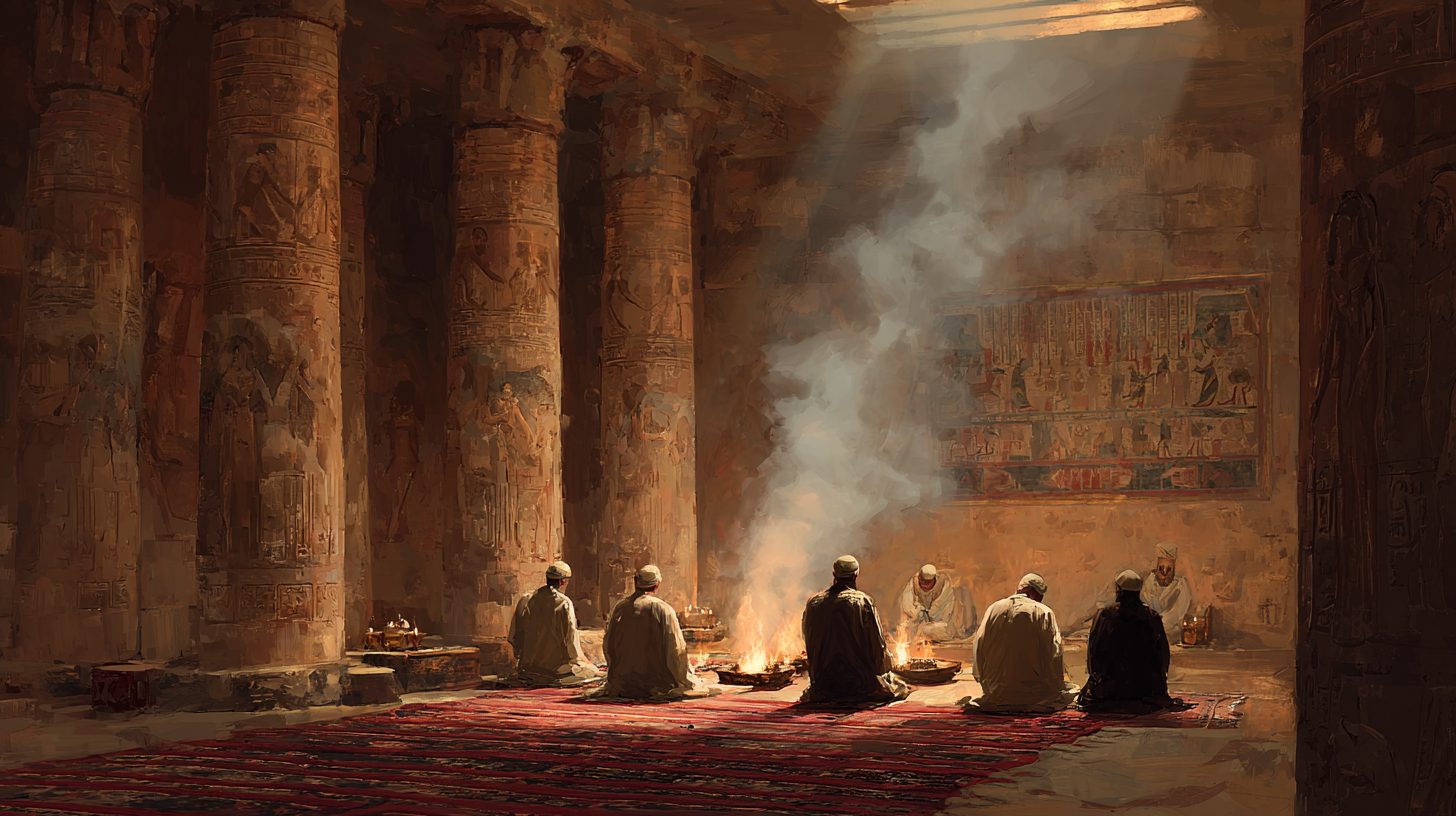
Egyptian temples were not simply places of worship; they were architectural textbooks. Proportions, reliefs, lighting, and processional routes encoded Mystery School teachings. Walking through a temple was itself an initiatory journey from ignorance to illumination.
The Great Pyramid, in particular, has long been associated with Mystery School initiation. While modern archaeology debates its exact function, esoteric traditions maintain that it served as a chamber of transformation, where initiates confronted death symbolically and emerged reborn in consciousness.
Influence on Later Traditions
The Egyptian Mystery School did not vanish; it migrated. Greek philosophers, including Plato, openly acknowledged Egyptian sources of wisdom. Concepts later found in Hermeticism, Neoplatonism, and even early Christian mysticism bear clear Mystery School fingerprints.
The very idea of enlightenment as inner awakening, rather than external salvation, owes much to the Egyptian Mystery School model. Through cultural transmission, its principles shaped Western esoteric traditions for millennia.
Enlightenment as Integration, Not Escape
Contrary to modern misconceptions, the Egyptian Mystery School did not teach escape from the world. Enlightenment meant integration. The initiate was expected to return to society as a stabilizing force, embodying Ma’at through just action and wise leadership.
This practical orientation distinguishes the Egyptian Mystery School from purely ascetic traditions. Spiritual realization was validated through ethical behavior, clarity of speech, and service to the community.

The Path to Enlightenment Today
While the ancient temples stand largely silent, the principles of the Egyptian Mystery School remain strikingly relevant. Self-knowledge, symbolic thinking, moral integrity, and disciplined inner work are timeless requirements for enlightenment.
In an age overwhelmed by information, the Mystery School approach offers a corrective: depth over noise, transformation over consumption. The path is demanding, often uncomfortable, and never passive. Yet its promise remains profound: to know oneself as a conscious participant in a living cosmos.
Conclusion
The Mystery Schools of Egypt represent one of humanity’s earliest and most sophisticated models of spiritual development. Rooted in myth, ritual, ethics, and cosmology, the Egyptian Mystery School was a complete system for awakening the soul. Its teachings insist that enlightenment is not given but earned, not declared but embodied.
To study the Egyptian Mystery School tradition is to confront an enduring question: are we content to live unconsciously, or are we willing to undergo the inner death required for genuine illumination?
The ancient initiates believed the answer determined not only the fate of the soul, but the harmony of the world itself.